


Coming off his first championship in one of the most beautiful Air Jordans ever made, Michael Jordan and Nike were ready for a seventh silhouette and an assault on a second ring. For the 1992 season, Tinker Hatfield and MJ conceived a model that was simplified in design but monumentally important in history: it was the true beginning of Air Jordan as a brand separate from Nike.
Inspired by the new minimalist approach of the Huarache line (which Tinker also created), he crafted a seamless silhouette: the AJ7. This model saw a departure from visible Air units, "Icy" outsoles, lace locks, and the aggressive details of the AJ6. So why, despite such simplicity, is the AJ7 such a vital member of the Jordan family? Read on to find out.
The Huarache Revolution
Thanks to the genius of Tinker Hatfield, the new silhouette featured minimalism combined with Huarache technology. This neoprene inner bootie acted like a sock, "hugging" the foot—exactly as the Nike Huarache slogan promised—providing elite ankle support while using incredibly lightweight materials. The Air Jordan 7 was the first silhouette in the main line to be honored with this specific Huarache tech.
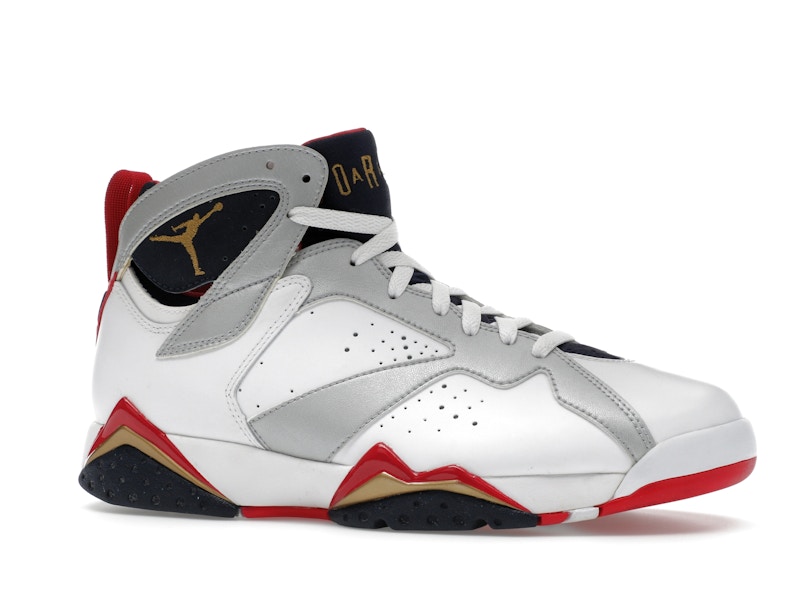
To make the design lighter and more streamlined, Tinker decided to remove the visible Air window. In fact, we wouldn't see the air inside the sole again for years.
Standalone Brand: The Vanishing Swoosh
You might wonder—even the AJ6 had a "Nike Air" logo on the heel, but the AJ7 has nothing but the Jumpman and Jordan branding. This wasn't an accident. Tinker Hatfield believed the Air Jordan line should grow on its own, without a close visual association with Nike. While it seemed like a subtle move at the time, it was a crucial step toward the eventual formation of Jordan Brand as a standalone entity.
Inspiration: The $15 Poster
While the performance side was minimal, the aesthetic inspiration was a radical shift toward African tribal art. The story goes that Tinker was in Portland and saw a poster in a shop window of a person playing a guitar shaped like the African continent. At the same time, MJ had told Tinker he wanted a shoe that would stay "young and interesting" but remain sophisticated.
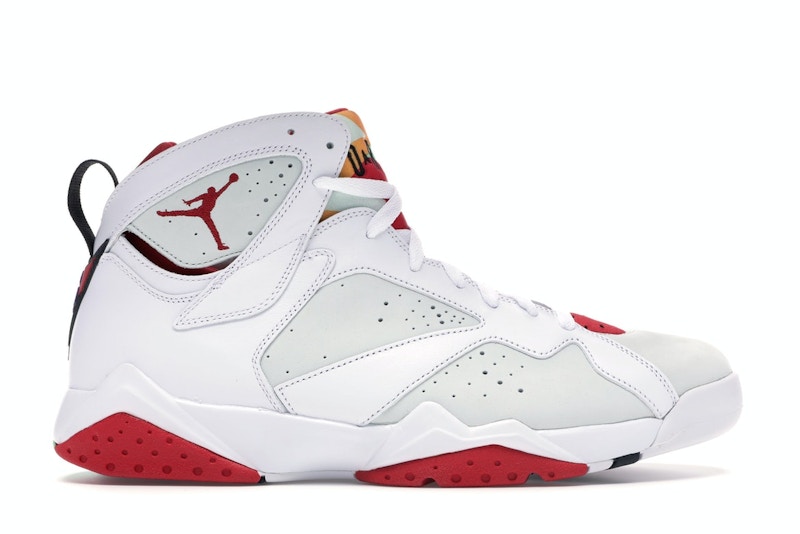
Tinker went into the shop to buy the poster, but the owner refused; it was a radio advertisement for Afropop music. Hatfield didn't give up—he introduced himself and eventually managed to buy the poster for $15. The geometric shapes of African art were integrated into the lines of the upper, and most famously, into the vibrant, multi-color patterns on the tongue and outsole. Finally, the "23" logo was stamped into a shield-like shape on the heels.
The Summer of '92
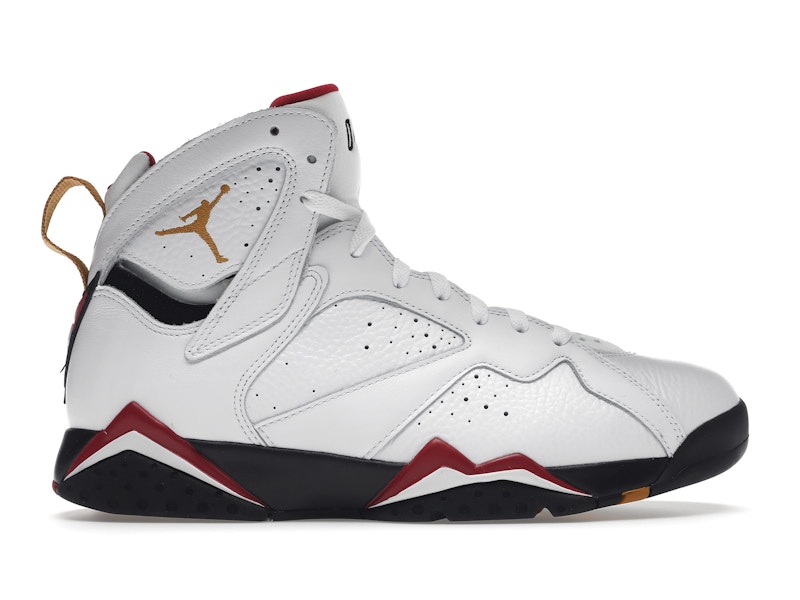
In 1992, the Air Jordan 7 launched for $125 in five OG colorways. During the regular season, MJ was seen in the white "Hare" and "Cardinal" versions. For the playoffs, he switched to the Black/True Red. At the 1992 All-Star Game, he wore the "Bordeaux" (the same pair seen in the "Jam" music video with Michael Jackson).
Then came the summer of ’92 and the "Olympic" colorway, featuring the number 9 on the heels instead of 23. This meant that, unlike some other models, Michael actually wore every single OG colorway of the AJ7.
Bugs Bunny and the Golden Year
The marketing campaign for the AJ7 introduced Bugs Bunny to the world of Jordans, starting one of the most popular brand partnerships in history.
But the "cherry on top" was Michael’s performance. The new minimalist design certainly didn't hinder him. In the 1991-92 season, MJ secured the regular season MVP, the scoring title, his second consecutive NBA Championship, the Finals MVP, and finally—as the peak of his greatest year to date—Olympic Gold in Barcelona with the "Dream Team."
← Air Jordan 6 History | Air Jordan 8 History →
Ready for your own game? Browse our basketball shoes (not sure which pair? read how to choose basketball shoes) – and if this era is your era, there are NBA jerseys too.