


The beginning of history. Of design. Of a revolution. It was the start of a new culture—one that has grown and evolved to the point where today, we have people with a clear "diagnosis": individuals who are truly addicted, who don't view Jordans as mere sneakers or clothing, but as a profound form of love.
The story of the Nike Air Jordan 1 is complex and filled with fascinating details. Every year, the legend of the man who created the AJ1 grows more phenomenal. As sneaker culture continues to bloom into a multi-billion dollar phenomenon, it’s worth looking back at how a relatively simple shoe made of black and red leather influenced everything from basketball to high fashion and modern everyday trends.
1984: The Arrival of the Rookie
In 1984, the Chicago Bulls selected Michael Jordan as the third overall pick in the NBA Draft. Hakeem Olajuwon and Sam Bowie were taken before him, largely because Houston and Portland were searching for "big men." The New York Times didn't even mention the "College Player of the Year" until the very end of the draft report. Although Michael wasn't the consensus "First Pick Prospect," the Bulls were confident enough to sign him to a 7-year, $6 million deal—the third-largest rookie contract in history at the time, trailing only Olajuwon and Ralph Sampson.
While the Bulls were signing their rookie, Nike was working on their own deal. Key figures were moving behind the scenes. Sonny Vaccaro, a marketing agent who had signed many college coaches for Nike, convinced Nike’s Marketing Director, Rob Strasser, that Jordan was worth signing at any price. Peter Moore was also brought in; he would eventually conceptualize the Air Jordan 1 design and the iconic "WINGS" logo.
The Rivalry of Brands
The negotiations were difficult. Jordan’s agent, David Falk, demanded more than any brand had ever offered a rookie. Believe it or not, Jordan actually preferred the "brand with the three stripes" and wanted to sign with the German giant, Adidas. However, the company was in a state of flux following the death of founder Adi Dassler in 1978, and Michael slipped through their fingers.
Converse was also in the mix, as Jordan had worn them throughout college due to Coach Dean Smith’s deal with the brand. Converse was ready to market Jordan alongside superstars Magic Johnson and Larry Bird, but they offered no innovation in design. Jordan showed zero interest in Nike and practically had to be dragged to Beaverton for the presentation.
But the "Swoosh" had the boldest plan: to separate Jordan from the rest of the league. Nike offered a completely new design tailored to his needs—they even customized the sizing, as Michael wore a US13 on his left foot and a US13.5 on his right. Vaccaro urged Nike to offer $500,000 per year for five years—the biggest endorsement deal of its time. When Falk took this offer back to Converse, they only offered $100,000. Neither Converse nor Adidas were willing to come close to what Nike envisioned for MJ.
"Banned" and the Birth of a Legend
The silhouette was named "AIR JORDAN" (after "Prime Time" was discarded as a title). Beyond the $2.5 million contract, Jordan received a percentage of every shoe sold. At a retail price of $65, Nike raked in $70 million in the first two months alone.
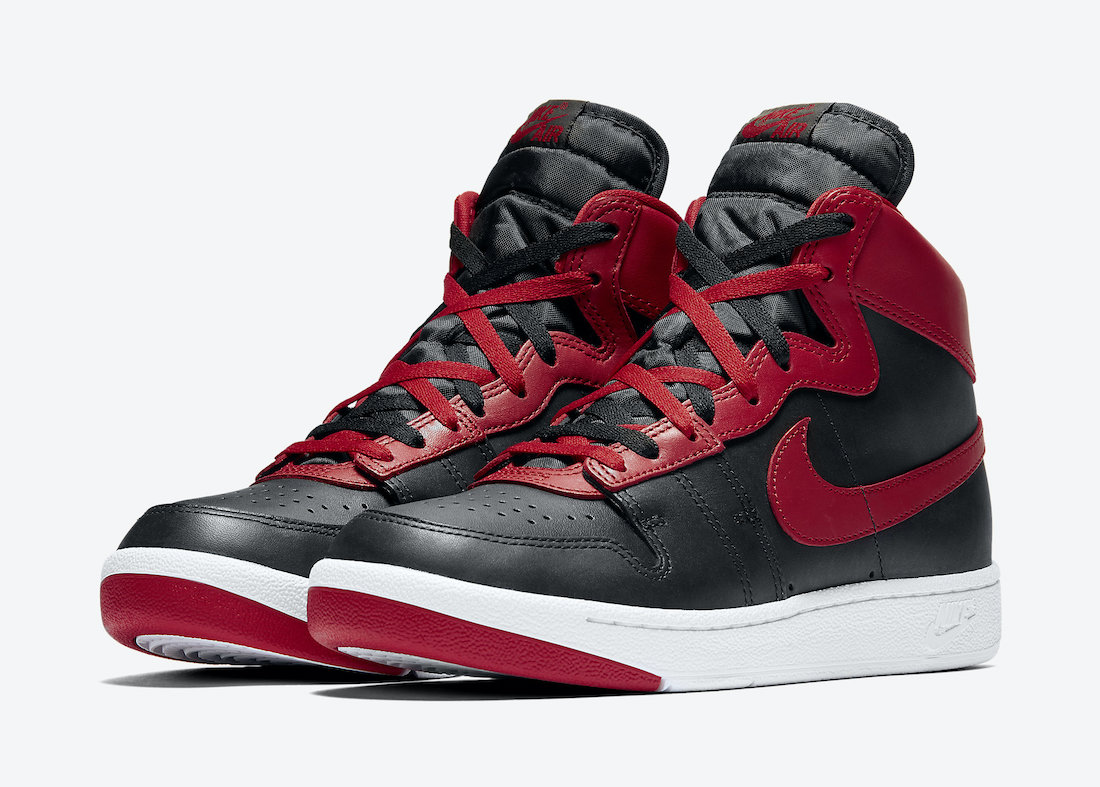
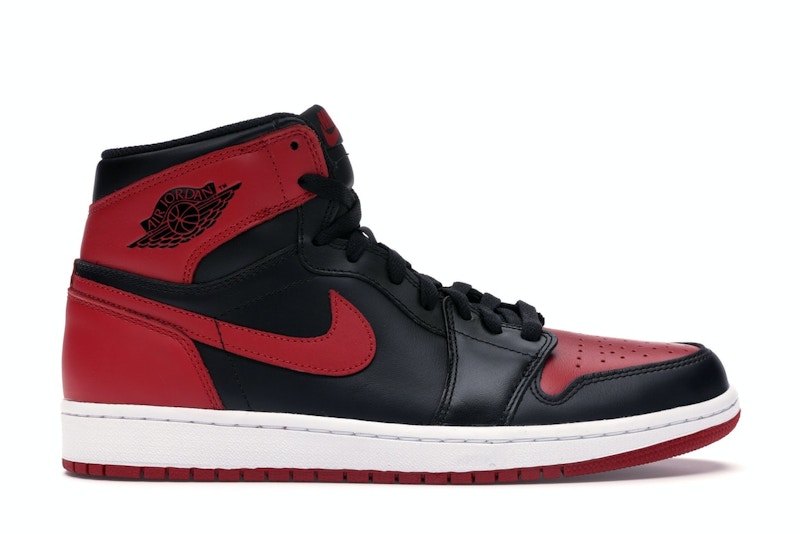
The AJ1 wasn't ready for the 1984-85 season opener, so Michael initially wore the Nike Air Ship, a $35 shoe that looked very similar. On October 18, 1984, in a preseason game against the Knicks, Jordan wore the black and red Air Ships. NBA Commissioner David Stern hated the "uniformity" violation and sent Nike a letter confirming that the "Bred" colorway was PROHIBITED. Legend says Jordan would have been fined $5,000 for every game he wore them.
Nike leaned into the controversy, launching the famous "BANNED" campaign, creating massive hype while conveniently omitting that the actual "banned" shoe was the Air Ship. In a 1986 interview with David Letterman, Jordan joked about the shoes being banned because "there's no white in them." When Letterman joked they were banned for being ugly, Jordan laughed and agreed: "Hey, I agree with you—they are ugly."
From Warehouse Clearance to Cultural Artifact
Despite the initial success, Nike eventually overproduced the AJ1. Pairs sat on shelves for years, marked down to as low as $20. This surplus coincided with the rise of the skateboard community. Skaters needed cheap, durable leather shoes that offered more protection than canvas—the $20 Jordan 1 was the perfect match. This connection eventually paved the way for the Nike SB Dunk program.
Today, finding an original 1985 pair is a quest for "Grails." Depending on the condition and provenance, a pair can fetch anywhere from $3,000 to $30,000. These aren't just shoes anymore; they are cultural monuments.
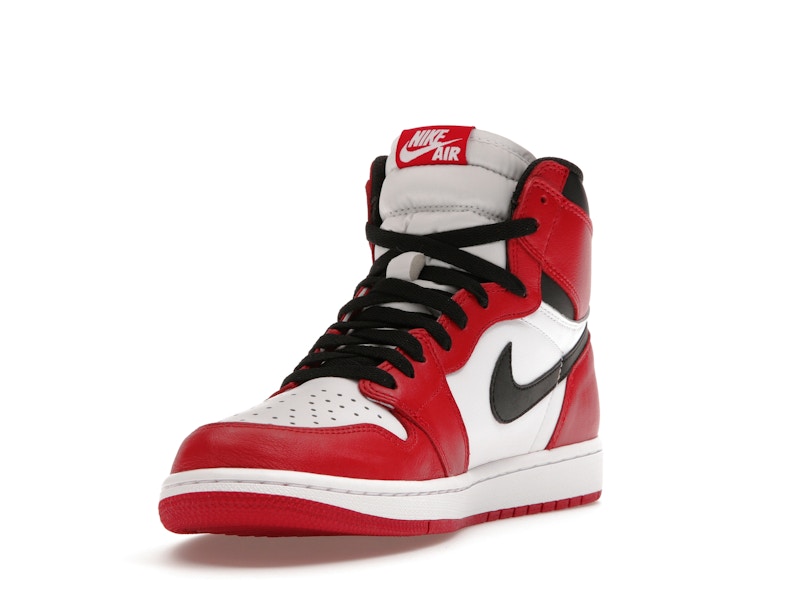
The "Retro" era didn't truly begin until 1994-95, and it exploded in 2001. Since then, the Air Jordan 1 has been released in countless colorways, cementing its status as the most popular sneaker of all time. The "Chicago," "Bred," and "Black Toe" remain the most significant—forever synonymous with a skinny guard from North Carolina who rose from a rookie to the Greatest of All Time.
Also in our history series: The LeBron James Shoe Story →
Ready for your own game? Browse our basketball shoes (not sure which pair? read how to choose basketball shoes) – and if this era is your era, there are NBA jerseys too.